


Fixing the Taskbar Not Hiding in Fullscreen Issue
The Windows taskbar is supposed to stay hidden when you enter fullscreen mode in games, videos, presentations, or browsers. However, many Windows 10 and Windows 11 users experience an annoying issue where the taskbar keeps showing in fullscreen mode, blocking part of the screen and ruining the viewing or gaming experience.
This problem can happen in:
- YouTube fullscreen videos
- Netflix or streaming apps
- PC games
- PowerPoint presentations
- Media players
- Browsers like Chrome, Edge, or Firefox
Fortunately, the issue is usually caused by temporary glitches, notification conflicts, display settings, or Explorer problems — and most fixes are straightforward.
In this guide, you’ll learn why the taskbar appears in fullscreen mode and how to fix it properly.
Why Does the Taskbar Appear in Fullscreen Mode?
Normally, Windows automatically hides the taskbar whenever an app enters exclusive fullscreen mode. If it stays visible, Windows may think another process requires attention or the fullscreen app has lost focus.
The taskbar may appear because of:
- Windows Explorer glitches
- App notifications
- Auto-hide problems
- Overlay applications
- Browser issues
- Graphics driver conflicts
Common Symptoms
You may notice:
- Taskbar visible during games
- Taskbar covering videos
- Auto-hide not working
- Flashing taskbar icons
- Fullscreen apps minimizing unexpectedly
- Taskbar appearing after notifications
How To Fix Taskbar Showing in Fullscreen
Try these solutions one by one until the problem is resolved.
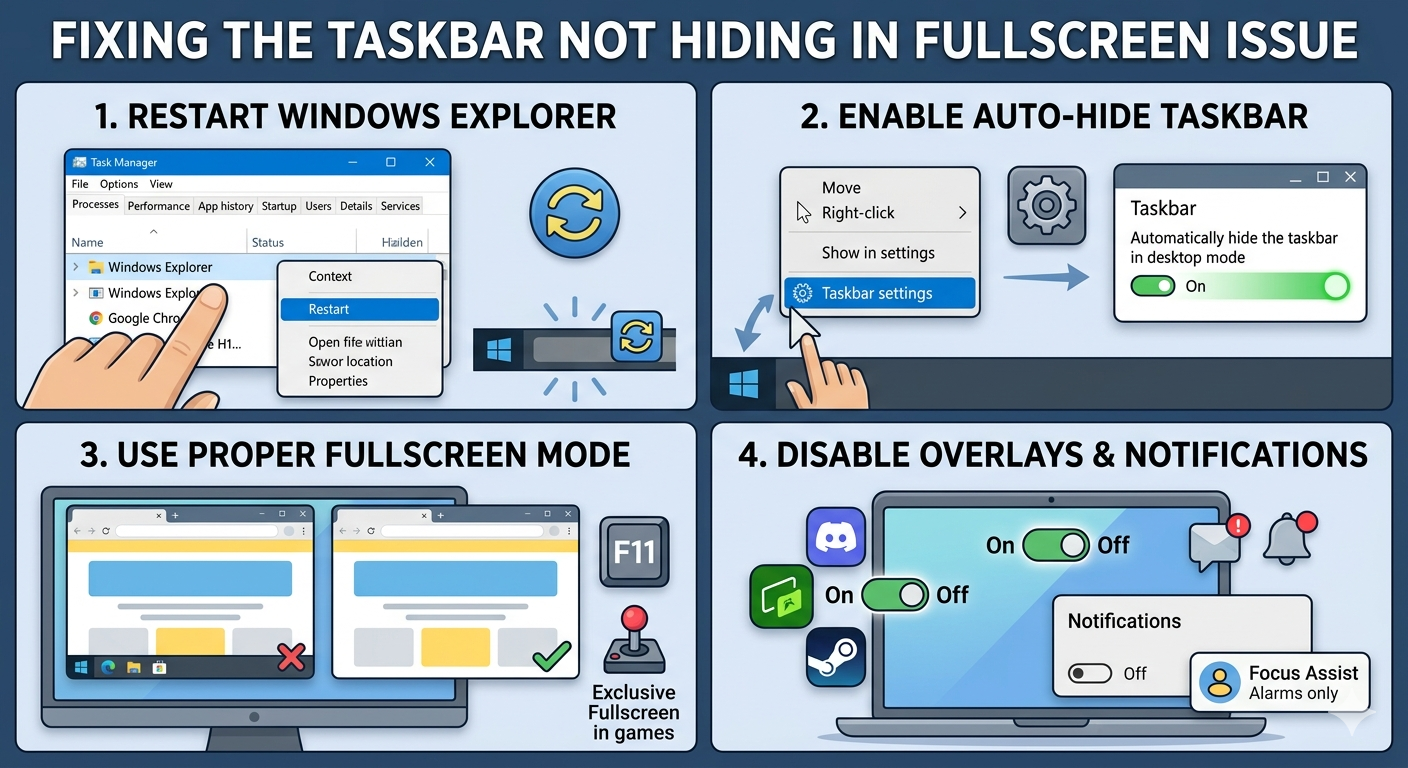
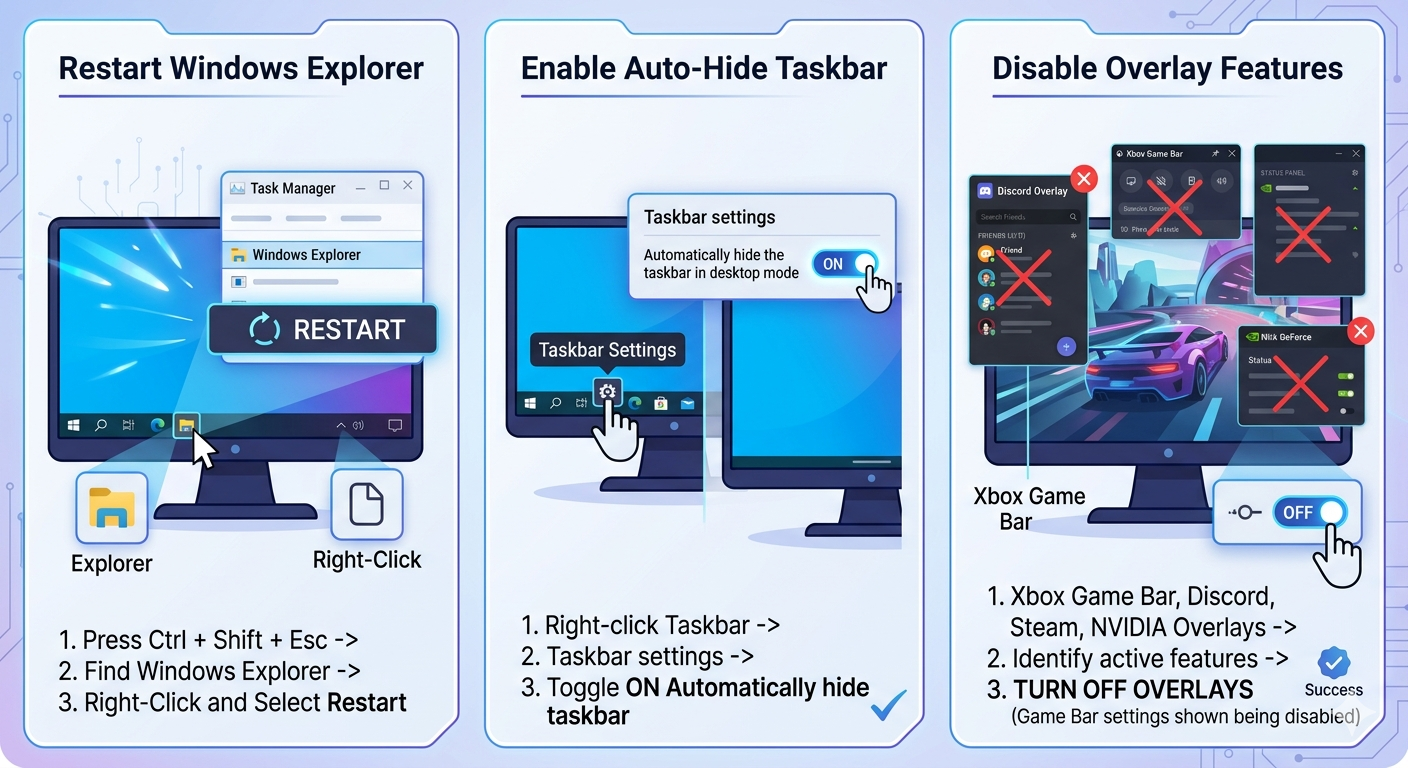
Restart Windows Explorer
Restarting Explorer is often the fastest fix.
Steps
- Press
Ctrl + Shift + Esc - Open Task Manager
- Find Windows Explorer
- Right-click it
- Select Restart
Your screen may flicker briefly.
Enable Auto-Hide Taskbar
Refreshing auto-hide settings can solve the issue.
Steps
- Right-click the taskbar
- Select Taskbar settings
- Turn on:
Automatically hide the taskbar in desktop mode- Wait a few seconds
- Test fullscreen mode again
If needed, toggle the option off and back on.
Use Proper Fullscreen Mode
Some apps only maximize windows instead of entering true fullscreen mode.
Browser Fullscreen Shortcut
Press:
F11This enables true fullscreen in most browsers.
For Games
Use the game’s settings menu and select:
- Fullscreen
instead of: - Borderless Windowed
Close Notification Apps
Notifications can force the taskbar to appear.
Common Apps That Cause Problems
- Discord
- Teams
- Skype
- Outlook
- Antivirus programs
- Messaging apps
Close these apps temporarily and test fullscreen again.
Disable Windows Notifications
System notifications can interrupt fullscreen applications.
Steps
- Open Settings
- Go to System → Notifications
- Turn off unnecessary notifications
You can also enable Focus Assist.
Enable Focus Assist
Focus Assist suppresses notifications during fullscreen activity.
Steps
- Open Settings
- Go to System → Focus Assist
- Select:
- Alarms only
or: - Priority only
- Alarms only
Disable Overlay Features
Overlays commonly interfere with fullscreen mode.
Examples
- Xbox Game Bar
- Discord Overlay
- Steam Overlay
- NVIDIA GeForce Overlay
Disable Xbox Game Bar
- Open Settings
- Go to Gaming → Xbox Game Bar
- Turn it off
Update Graphics Drivers
Outdated display drivers may affect fullscreen rendering.
Steps
- Right-click Start
- Open Device Manager
- Expand Display adapters
- Right-click your GPU
- Select Update driver
Restart afterward.
Run System File Checker
Corrupted system files may affect taskbar behavior.
Steps
Open Command Prompt as administrator and run:
sfc /scannowRestart after completion.
Use DISM Tool
If Windows components are damaged:
Steps
Run:
DISM /Online /Cleanup-Image /RestoreHealthCheck Browser Extensions
Extensions can interfere with fullscreen video playback.
Try
- Disabling browser extensions
- Clearing browser cache
- Updating your browser
Perform a Clean Boot
Background applications may be causing conflicts.
Steps
- Press
Windows + R - Type:
msconfig- Hide Microsoft services
- Disable non-essential services
- Disable startup apps
- Restart your PC
Change Display Scaling Settings
Incorrect scaling can affect fullscreen behavior.
Steps
- Open Settings → Display
- Set scaling to recommended values
- Restart your PC
Check Multi-Monitor Setup
Multiple monitors may confuse taskbar behavior.
Try
- Disconnecting secondary monitors
- Changing the primary display
- Updating monitor drivers
Reset Taskbar Settings
Taskbar settings may be corrupted.
Quick Fix
- Toggle auto-hide on/off
- Restart Explorer
- Reapply taskbar settings
Create a New User Account
A corrupted user profile may cause persistent UI problems.
Steps
- Open Settings → Accounts
- Add a new user account
- Sign into the new profile
- Test fullscreen mode
Update Windows
Microsoft often fixes taskbar bugs through updates.
Steps
- Open Settings → Windows Update
- Click Check for updates
- Install updates
- Restart the system
When Games Cause the Problem
Games using borderless display modes often trigger taskbar visibility.
Solutions
- Switch to exclusive fullscreen mode
- Update the game
- Verify game files
- Disable overlays
Tips to Prevent Taskbar Fullscreen Issues
To avoid future problems:
- Keep graphics drivers updated
- Minimize startup applications
- Disable unnecessary overlays
- Keep Windows updated
- Restart Explorer when UI glitches occur
When to Seek Additional Help
You may need advanced troubleshooting if:
- Taskbar constantly reappears
- Explorer crashes frequently
- Games freeze in fullscreen
- Multiple Windows UI problems occur
Final Thoughts
The issue where the taskbar shows in fullscreen mode is usually caused by notification interruptions, Explorer glitches, overlay software, or display-related conflicts. While frustrating, the problem is often easy to resolve using built-in Windows settings and simple troubleshooting methods.
By restarting Windows Explorer, enabling auto-hide, disabling overlays, updating drivers, and checking fullscreen settings, most users can restore proper fullscreen behavior quickly.
Related articles
Fixing the “Kernel Security Check Failure” Error on Windows 10