


Troubleshooting Mobile Hotspot Problems in Windows 10
The Mobile Hotspot feature in Windows 10 allows you to share your computer’s internet connection with other devices such as smartphones, tablets, and laptops. It’s a convenient solution when you need quick internet access on multiple devices without relying on a router. However, many users encounter issues where the Mobile Hotspot fails to work properly.
If your Windows 10 Mobile Hotspot is not working, don’t worry. This guide will explain the common causes and provide step-by-step solutions to fix the problem effectively.
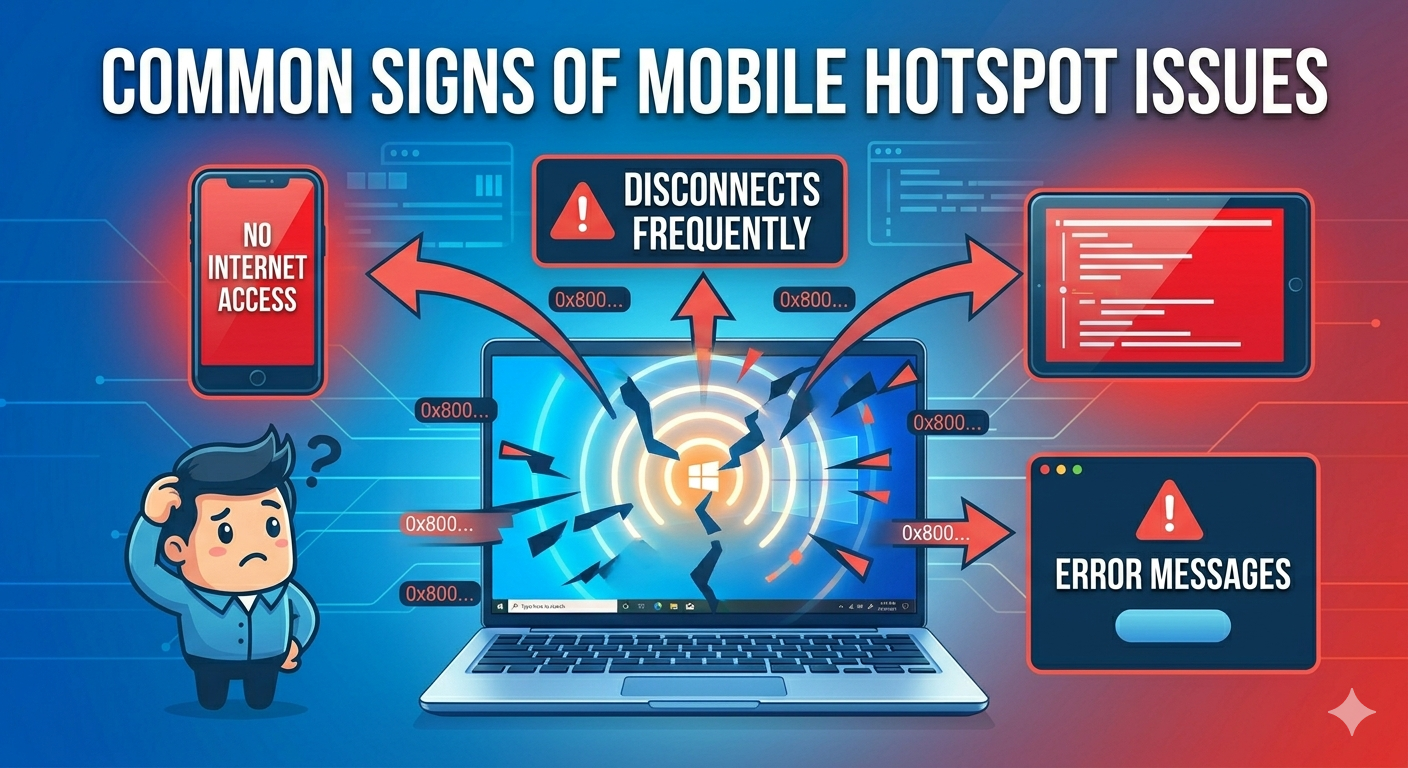
Common Signs of Mobile Hotspot Issues
Before troubleshooting, it’s helpful to understand how the issue may appear. Common symptoms include:
- Mobile Hotspot won’t turn on
- Devices cannot connect to the hotspot
- Connected devices have no internet access
- Hotspot disconnects frequently
- Error messages when enabling the feature
These issues can stem from network settings, drivers, or system conflicts.
Why Windows 10 Mobile Hotspot Stops Working
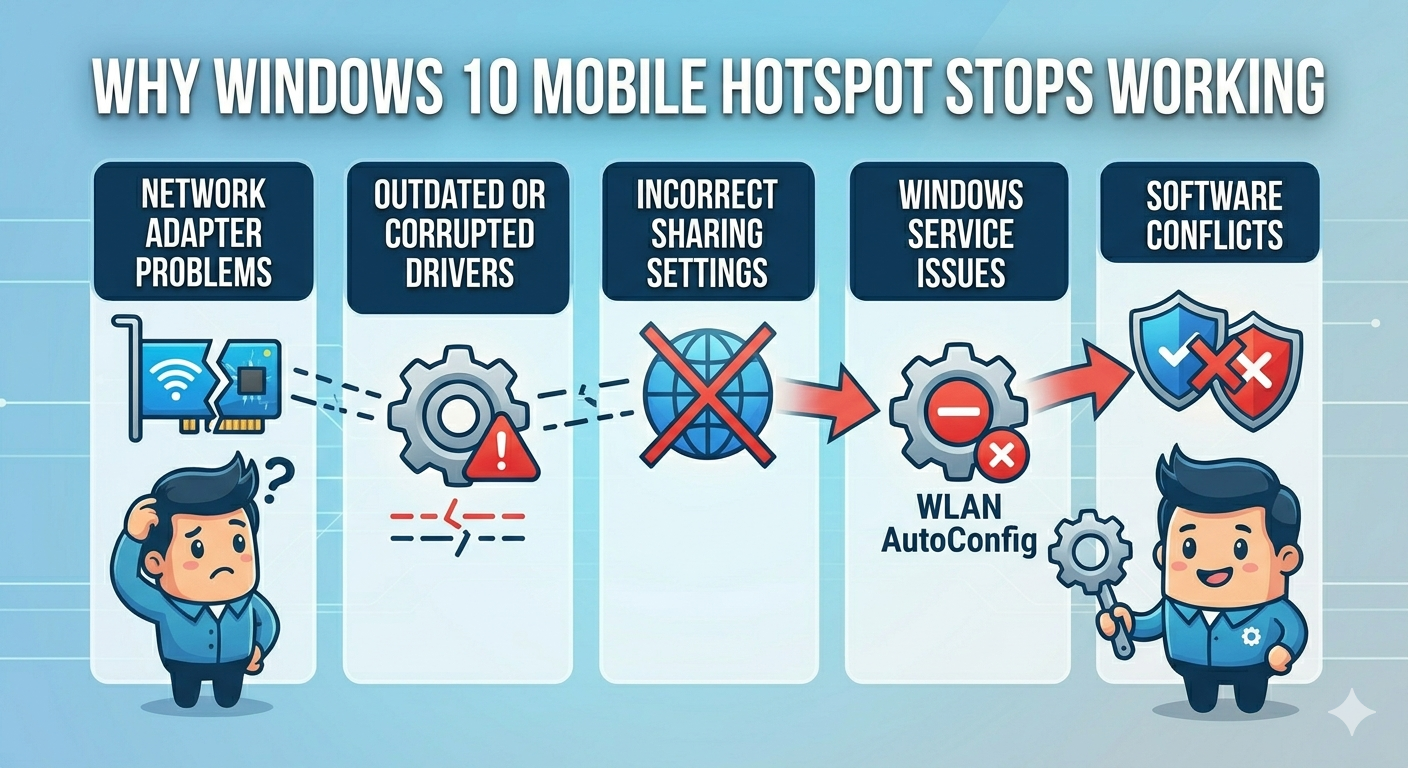
There are several reasons why the Mobile Hotspot feature may fail.
Network Adapter Problems
The wireless adapter is essential for hotspot functionality. If it’s disabled or malfunctioning, the hotspot won’t work.
Outdated or Corrupted Drivers
Drivers control how hardware communicates with Windows. Faulty drivers can break hotspot functionality.
Incorrect Sharing Settings
Improper configuration of Internet Connection Sharing (ICS) can prevent devices from accessing the internet.
Windows Service Issues
Certain services must be running for Mobile Hotspot to function correctly.
Software Conflicts
Third-party applications, including VPNs or firewalls, may interfere with the hotspot.
How to Fix Windows 10 Mobile Hotspot Not Working
Below are the most effective methods to restore hotspot functionality.
Turn Mobile Hotspot Off and On Again
Sometimes a simple reset is enough.
Steps
- Open Settings
- Go to Network & Internet
- Click Mobile Hotspot
- Turn it Off, wait a few seconds, then turn it On again
Test if devices can connect.
Check Your Internet Connection
Your PC must have an active internet connection to share.
What to Do
- Open a browser and test your connection
- Restart your modem or router
- Switch between Wi-Fi and Ethernet
Ensure your connection is stable before enabling the hotspot.
Enable Internet Connection Sharing (ICS)
ICS must be enabled for the hotspot to work.
Steps
- Press
Windows + R, type ncpa.cpl, and press Enter - Right-click your active internet connection
- Select Properties
- Go to the Sharing tab
- Check Allow other network users to connect through this computer’s Internet connection
- Click OK
Try enabling the hotspot again.
Update Network Drivers
Outdated drivers can cause connectivity issues.
Steps
- Right-click the Start button
- Select Device Manager
- Expand Network adapters
- Right-click your Wi-Fi adapter
- Click Update driver
- Choose Search automatically for drivers
Restart your computer after updating.
Reinstall Network Adapter
If updating doesn’t help, reinstall the adapter.
Steps
- Open Device Manager
- Right-click your network adapter
- Select Uninstall device
- Restart your computer
Windows will reinstall the driver automatically.
Check Required Services
Certain Windows services must be running.
Steps
- Press
Windows + R, type services.msc, and press Enter - Locate the following services:
- Internet Connection Sharing (ICS)
- Windows Update
- WLAN AutoConfig
- Ensure they are Running and set to Automatic
Restart any service that is stopped.
Disable Power Saving for Network Adapter
Power-saving settings can disable your adapter.
Steps
- Open Device Manager
- Right-click your network adapter
- Select Properties
- Go to the Power Management tab
- Uncheck Allow the computer to turn off this device to save power
- Click OK
Test the hotspot again.
Change Network Band or Name
Sometimes compatibility issues cause connection failures.
Steps
- Go to Settings → Network & Internet → Mobile Hotspot
- Click Edit
- Change the network name or password
- Switch between 2.4 GHz and 5 GHz (if available)
Save changes and reconnect your devices.
Turn Off Bluetooth
Bluetooth can sometimes interfere with hotspot functionality.
Steps
- Go to Settings → Devices → Bluetooth & other devices
- Turn off Bluetooth
Check if the hotspot works properly afterward.
Disable VPN and Firewall Temporarily
VPNs and firewalls may block connections.
What to Do
- Turn off your VPN
- Temporarily disable third-party firewall software
- Test the hotspot
Remember to re-enable security tools after testing.
Run Network Troubleshooter
Windows includes a built-in troubleshooter.
Steps
- Open Settings
- Go to Update & Security → Troubleshoot
- Click Additional troubleshooters
- Select Network Adapter
- Run the troubleshooter
Follow the instructions provided.
Reset Network Settings
If nothing works, resetting network settings can help.
Steps
- Open Settings
- Go to Network & Internet
- Scroll down and click Network reset
- Confirm the reset
Your PC will restart and reset all network configurations.
When to Consider Advanced Solutions
If the issue persists, you may need to:
- Update Windows to the latest version
- Perform a System Restore
- Reset Windows while keeping your files
These steps should be used only if basic troubleshooting fails.
Tips to Prevent Mobile Hotspot Issues
To avoid future problems:
- Keep drivers and Windows updated
- Avoid installing untrusted network tools
- Maintain stable internet connections
- Regularly restart your system
- Use compatible devices
These practices help ensure smooth hotspot performance.
Final Thoughts
The Windows 10 Mobile Hotspot feature is incredibly useful, but it can sometimes stop working due to network issues, driver problems, or misconfigured settings. Fortunately, most issues can be fixed with simple troubleshooting steps.
Related articles
How to Fix Wi-Fi Disconnecting Issues on Windows 10